Categories
Pets

Worthy

Our new puppy, Charlie, is an early riser; most days, he awakens well before sunrise.

He’s potty-trained but still has accidents, at least one per day. They tend to happen at the most random times and in the most random places.

He’s an eating machine, always ready for another meal. We have to watch him carefully, lest he eat Mollie’s dinner or the cats’ food after he’s finished his own.

He’s teething, so he chews on everything – furniture, shoes, clothes, human fingers. He’s ripped numerous toys to shreds, leaving pieces of fluff and stuffing scattered around the house.

Sticks, leaves, dirt, the most minute pieces of life – all end up in his mouth. No matter how thoroughly we clean the floors, he will find the one fragment left behind. I’m constantly fishing something out from between his little jaws.

To put it simply, he’s high maintenance. His energy and carefree, youthful, happy-go-lucky nature necessitate constant awareness and attention. My days are filled with What’s Charlie doing where’s Charlie no Charlie no Charlie good boy Charlie come here Charlie let’s go Charlie Charlie Charlie Charlie.

He’s also overjoyed to see me anytime I’ve been out of his sight for more than a few minutes. Overjoyed. Bouncing, wiggling, tail-wagging, putting-his-paws-up-to-be-held kind of joy.

When I hold him, he snuggles against me, putting his head in the gap between my head and my shoulder, and gives tiny, contented sighs. When he’s ready for a nap, he’ll curl against me, a warm bundle of fur and happiness.

And when he looks at me, it’s with one of three expressions: cute curiosity, total trust, or absolute adoration. I am his Favorite, his One Above All Others, his Most Beloved.

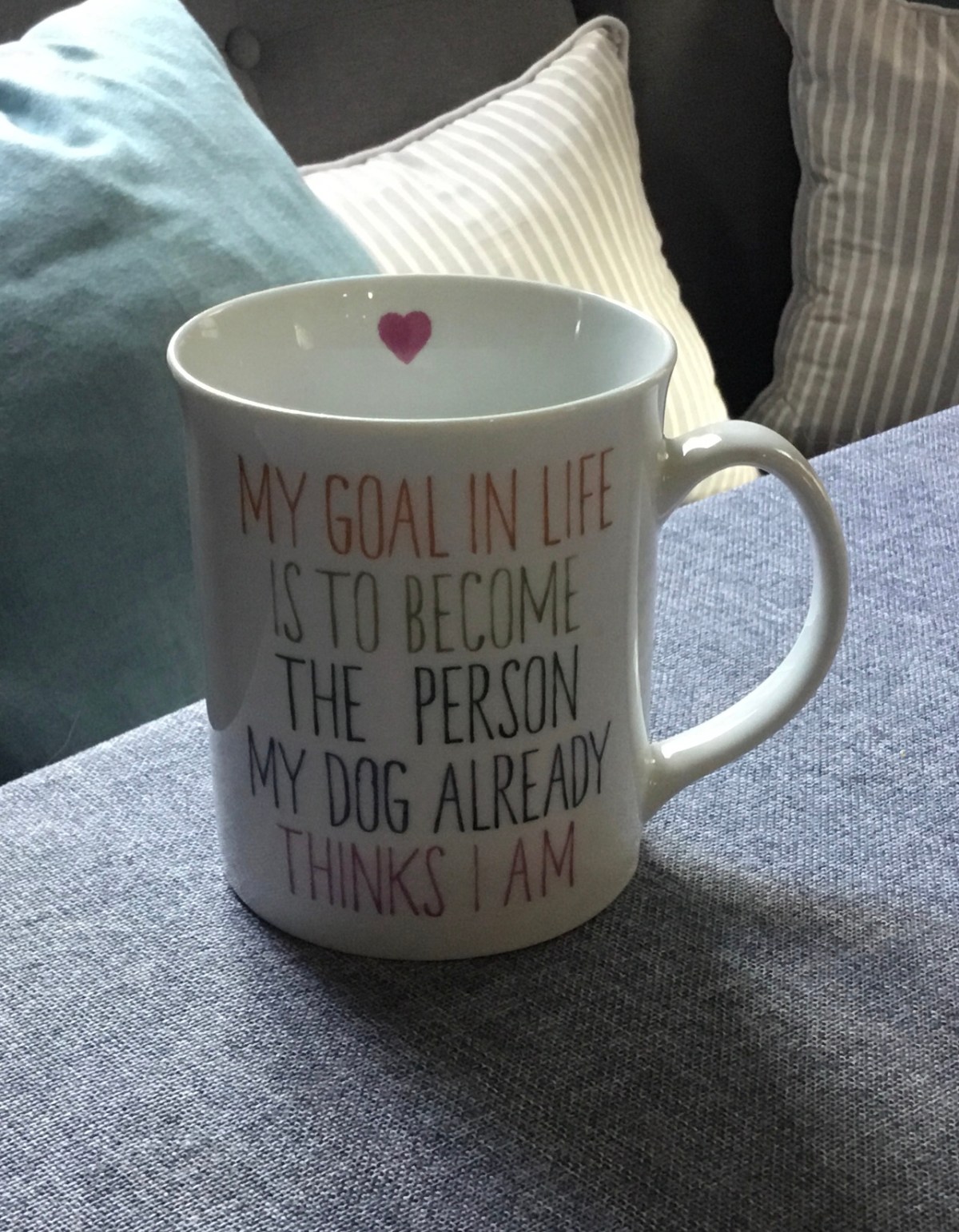
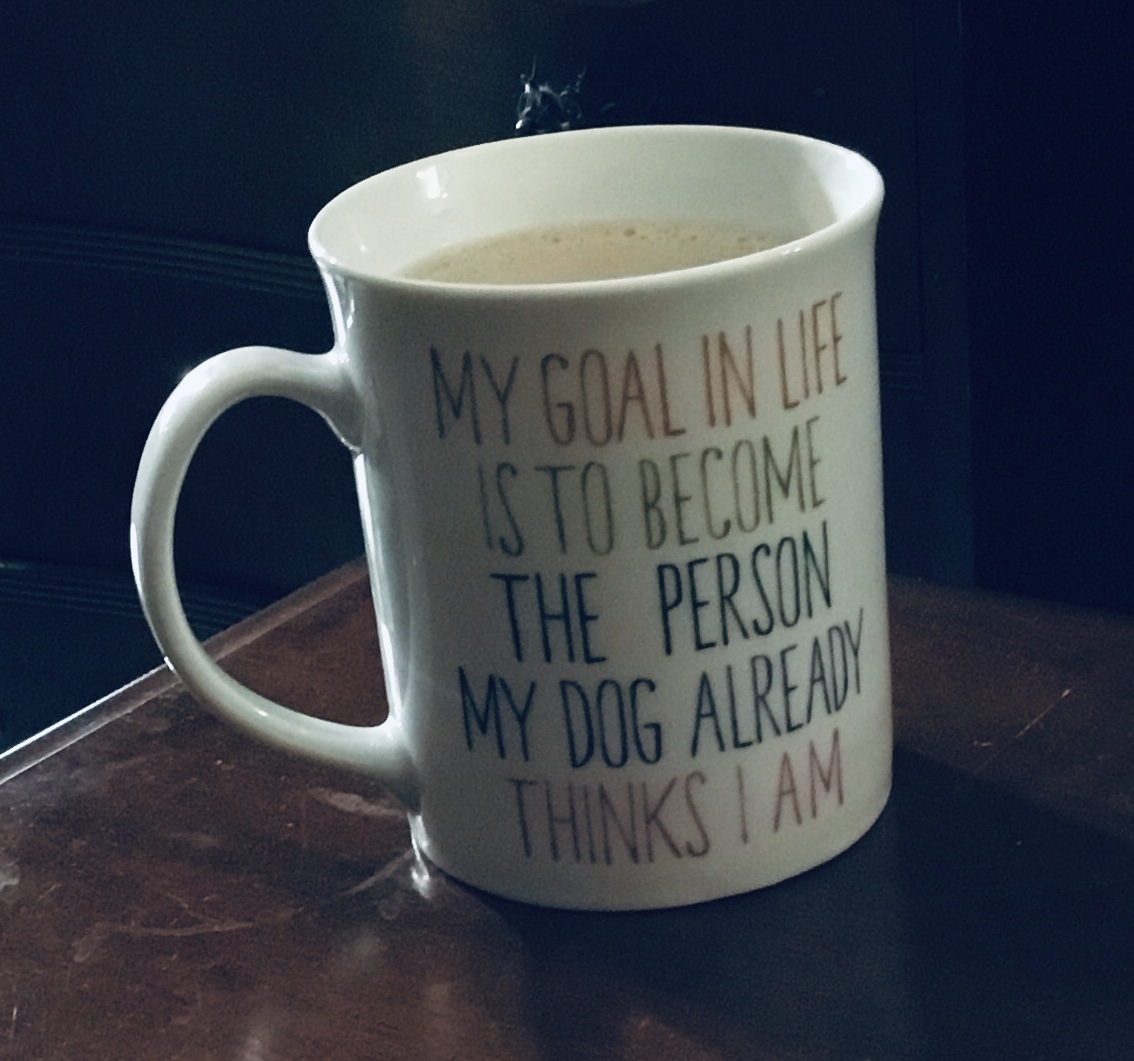
Dear little Charlie, I sincerely doubt that I’ll ever be as worthy of your affection as you believe me to be. But, I promise I’ll never stop trying.

Categories
Life People

Brand

I’ve never bought anything from Zappos.

I don’t do a lot of online shopping, so that’s not a statement about my feelings about the company. On the contrary, I’m a Zappos admirer. If I wanted to purchase shoes or clothing online, Zappos would be one of the first options I’d consider. I’d even recommend – in fact, have recommended – Zappos to other people.

Why am I a Zappos fan, despite not being an actual customer (so far)? I’m inspired by the Zappos story, the journey from a little online shoe company to an e-commerce powerhouse.

The business results – financial returns, company growth, all of the other traditional “business” measurements – are impressive, of course. What I find particularly appealing, however, is what drives those results: the Zappos culture.

Until recently, the person leading the culture charge was Tony Hsieh. His perspective was (is) seen by some as radical, extreme, unsustainable. Encourage your employees to spend as much time as necessary to help a customer? Recommend a competitor if you aren’t able to meet a customer’s needs? Spell out company values and then prioritize those values over technical skills when hiring new employees? Crazy stuff, some might say.

But if you zero in on what’s really going on, what’s happening to build and sustain and expand the Zappos brand, the beloved Zappos experience, it’s not extreme at all. It’s very simple.

It’s people.

Zappos sells shoes and clothing online. That’s where the money comes from, and yes, the money is vital. A business can’t operate without it.

But – the reason Zappos exists is to serve people, both outside (customers) and inside (employees) the company.

Zappos puts people at the center of their business, treats them with care and respect and appreciation, trusts them to make good decisions, and listens to and learns from them. Customers and employees respond in kind.

This approach doesn’t guarantee that every day is full of unicorns and lollipops. Sometimes, mistakes get made, bad things happen, plans fail. Nobody’s perfect. That’s reality.

It’s hard to argue with success, however. The results are there; they tell a story that can’t be ignored.


Today’s cuppa honors Tony Hsieh, who passed away on November 27. Here’s to his brand of putting people first. I hope that his message continues to influence the world of business for generations to come.

Categories
Life Neato

Bridge

Yesterday, I read an article about a bridge in Utah that was constructed as part of an overpass widening project. The bridge is intended to give a safe “paw passage” for wildlife across the interstate highway.

According to the article, the plan is working. Deer, squirrels, and other wildlife are using the bridge. The article included video showing daytime and nighttime views of animals making their way from one side to the other. The end result is a safer journey for them as well as for the humans who are less likely to encounter a critter on the road.

“Innovation” can be a daunting word; it’s often associated with expectations of grand actions and never-before-seen results. It’s nice to be reminded that successful innovation, the kind that brings meaningful change, can be as simple as building a bridge.


Categories
Holidays

Gratitude

“Piglet noticed that even though he had a Very Small Heart, it could hold a rather large amount of Gratitude.” – A.A. Milne, Winnie the Pooh

Categories
People

Origin

Yesterday, I read an article in Time.com about Ruth Bader Ginsburg’s favorite collars. It reminded me of how much I enjoy origin stories, the ones that trace back to the start of something and explain how the puzzle pieces fit together to create a picture.

An interesting thing I’ve noticed about origin stories is that they very often start with a small action, a seemingly unremarkable, ordinary moment. In hindsight, the moment becomes important because of additional facts and context or because it was the first of many other such moments. Initially, however, that one little something that occurred at that point in time – that decision, or reaction, or word choice – floated in a pool of other somethings until it became Something More.

In the case of Justice Ginsburg, her iconic collars started with a quiet desire to feminize the robes worn by the U.S. Supreme Court Justices. The robes were designed for men; she and Sandra Day O’Connor were the first women to ever wear them.

In the space normally occupied by a man’s collar and tie, Justice Ginsburg and Justice O’Connor first added lace. Over time, Justice Ginsburg expanded her judicial wardrobe with a wide variety of collars. Some had beads, some had beautiful colors. Some were gifts specially designed in her honor. Each one held meaning for her; each one reflected a message or a memory, an unspoken display of her opinion and perspective.

What started as a simple choice evolved into an iconic signature. A small thing, perhaps – it certainly doesn’t have the significance of a military battle or a coronation. That fashion choice, however, now stands as a symbol of influence and impact, of possibilities and potential.

Who knows how many people will be inspired by one of those collars and the story behind it? And then, once inspired, what might they achieve?

How many origin stories are happening out there, right at this moment?

https://time.com/5914834/ruth-bader-ginsburg-collars/

Categories
Life

Tradition

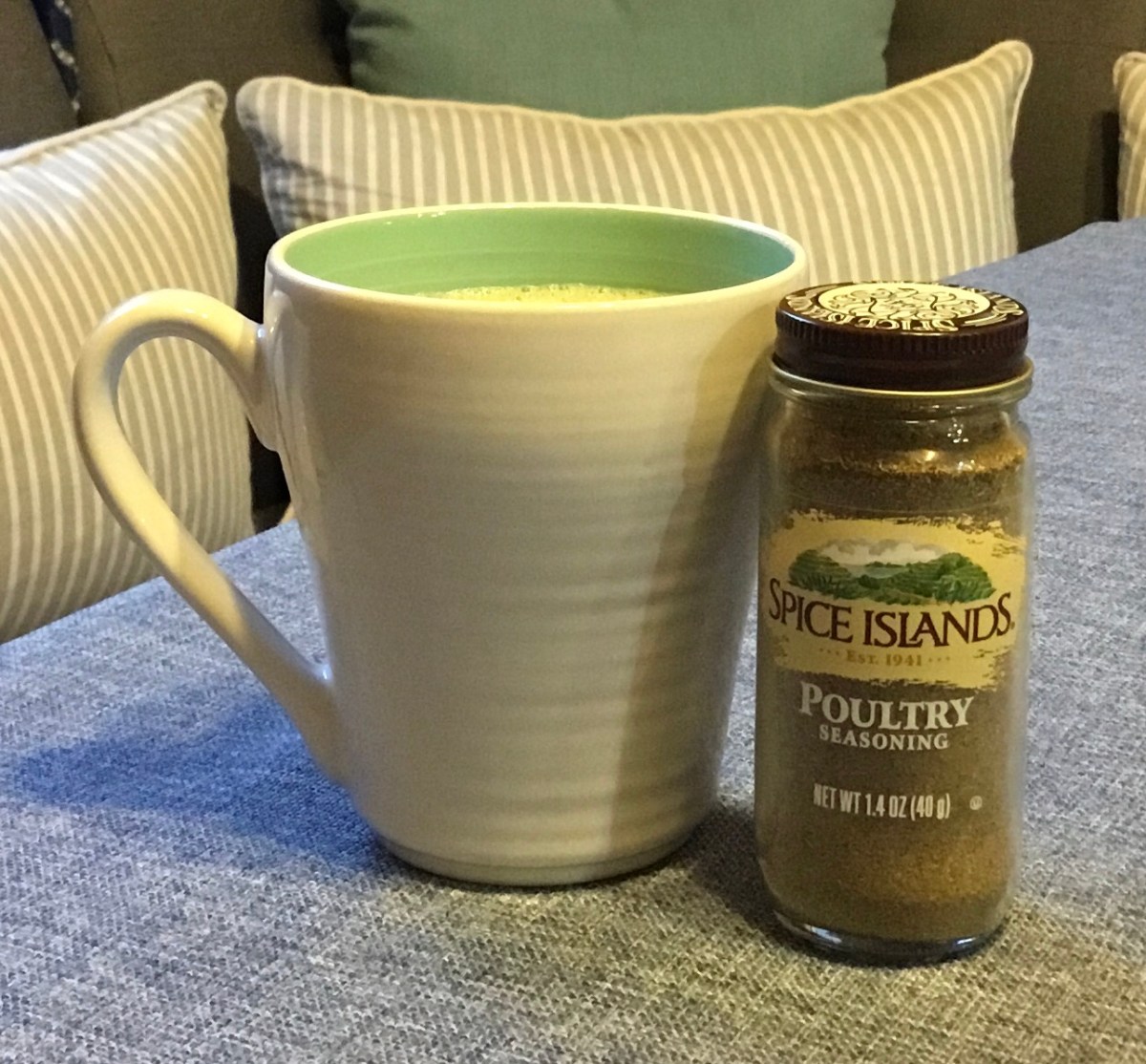
Every year before Thanksgiving, I buy a new jar of poultry seasoning.

I don’t use poultry seasoning very often during the rest of the year, so you’d think I wouldn’t have to buy a new jar. I can never find the previous year’s jar in time to start prepping the food, however, no matter how hard I look.

Every once in a while, I’ll find the missing jar a day or two after Thanksgiving. I’ll carefully set it next to the current year’s jar and whisper to myself, “Now you have two; don’t forget where you put them so you don’t end up buying something you don’t actually need next year.” But then, the following year, the cycle of loss repeats itself, and poultry seasoning goes back on my shopping list.

Most often, the missing jar(s) simply never appears. It’s a mysterious event, like two socks going into the wash and one sock coming out, or cupboards full of Tupperware lids without matching Tupperware containers. I’ve learned to accept it and just get on with things.

In the midst of all that’s different this year, I especially appreciate the little moments of continuity – the expected, the familiar – when they do occur.

Here’s to tradition.

Categories
People

Nancy

This year celebrates 90 years of Nancy Drew mysteries.

I, like many others, grew up on Nancy Drew. I read each book more than once and couldn’t wait for the next new one.

Through Nancy’s adventures, I learned the meaning of the words “sleuth” and “titian,” gained an appreciation for small details, and took my first steps toward a lifelong interest in understanding human behavior. Her curiosity, creativity, and confidence were inspirational.

I also admired Nancy because she wasn’t superhuman. She solved every mystery, but she made mistakes and sometimes found herself in some troubling circumstances. Still, she never failed to keep going, to do her best to achieve a positive outcome.

Nancy was polite and helpful, humble and kind. She waited her turn, gave credit to others, and generously shared with others. She was respectful when stating her opinion, used facts to make her case, and enjoyed learning new things. She was a good and loyal friend. Of course, solving mysteries meant that she had to take some risks, but they were carefully calculated. Responsibility was her hallmark.

Nancy was a stellar role model. I wanted to be just like Nancy.

Recently, I learned that when the first books were published, some book stores and libraries refused to carry them. The reason? Nancy didn’t behave the way a young woman of that age was supposed to behave. Her unconventional actions and independent nature simply weren’t acceptable.

I’ve always thought of myself as being influenced by a Good Girl. Who knew that Nancy was actually a Rebel all along?

“The young sleuth smiled. Although she was glad it was all over, she could not help but look forward to another mystery to solve.” – Carolyn Keene, The Hidden Staircase

Categories
People

Friendly

The other day, I was thinking about the long-term implications of mask-wearing and social cues.

I will clarify that I am 100% pro-mask as a means of minimizing the spread of disease, of keeping myself and others as safe as possible in the midst of the current pandemic. My musings aren’t related to an anti-mask perspective. Masks = good.

I also know, however, that facial expressions play a key role in communication. We smile, we frown, we show surprise and anger, fear and joy, all the feelings with our faces. These actions emphasize and reinforce our words, voice tone, and body language.

As babies and young children, we learn how to interpret and use these expressions by watching and mimicking other people. As adults, we depend on these learned cues to evaluate and choose our actions when interacting with others.

Sometimes, we make a conscious decision about what we see; for example, we walk into a room of smiling people and conclude that we’re in friendly territory. Sometimes, our interpretation is more of a gut-level reaction; for example, a tight-lipped expression with the words, “I’m fine” warns us that things are not, in fact, fine.

So, if the lower half of the faces of great numbers of people aren’t visible for significant portions of time, what’s the eventual outcome?

It will be interesting to revisit this question after we have a vaccine, after masks have been unnecessary for a while. In the meantime, our challenge is to work around the situation, to come up with creative options to cope with any communication gaps.

I learned about one such option yesterday. FriendlyFaces.com is a website offering personalized masks for purchase. You take a selfie, upload it to the website, and then select the size and other details of your mask. When your mask arrives, you have a means of safely presenting your face, with your chosen expression, to the world.

There’s no requirement that the expression be a happy one, of course. “Resting bitch face” is certainly an option. I suspect, however, that most people who order a mask end up choosing a smiling selfie. Humans are social creatures, after all. It’s hard to resist a friendly face.

Categories
Pets

Pack

We have a new puppy. Our local animal shelter was at capacity, and we’d been contemplating adding to our pet family, so we took the plunge and brought Charlie home.

In general, Mollie and Charlie have adjusted well to each other. One area of occasional conflict, however, is the dog toys.

Mollie has a couple of favorites from the Before Puppy times, and I bought a few new toys when Charlie joined us. My plan was that he’d have his toys, and Mollie would have hers.

What’s happened, however, is that they both want to claim them all.

Sometimes, one of them grabs a toy from the other and runs off. Sometimes, they follow each other, taking a passive-aggressive approach while Moose or Dr. Pooper or Blue Dog is held captive within their teeth. At other times, they’ll stare at each other in a quiet attempt to guilt the other into relinquishing control.

Typically, I leave them both to work it out on their terms, but I do sometimes step in to help them with this process of learning to share. I’ll offer them both a toy when it’s play time, and I referee when necessary to ensure peace. Occasionally, I’ll take Froggie, Mollie’s favorite, away from Charlie and give it back to Mollie, and then distract Charlie with a different toy.

What’s interesting to me is that this situation is not that different from when my sons were little and learning to share their toys. Of course, teaching young humans to get along with other humans involves circumstances and options that don’t apply to dogs. And I recognize there’s a bit of anthropomorphic action going on in the way I evaluate and approach the dog behavior. But there are undeniable similarities.

I’m encouraged by the fact that, after struggling to gain control of a prized possession, Mollie and Charlie will often playfully run around the backyard, taking turns being the chaser and chasee. Once that game is finished, they’ll explore the fence line and trees together, sniffing and digging in the leaves and dirt. When playtime is done, they’ll both search for a comfy napping spot, sometimes near to each other, sometimes apart, and they’ll settle in and drift off into a mutually contented snooze.

Here’s to dogs and what they can teach us about the foundational elements of successful pack living.


Categories
Good People

Racing

2020 can be defined in a lot of ways. One way that I define it is as the Year of Racing.

Racing to keep the numbers under control. Racing to find a vaccine. Racing toward the election and then the ballot counts. Racing to figure out how to manage things remotely, work and school, social life and grocery shopping. Racing to plan for, to manage, to cope with the consequences of life turned upside down.

It often feels like there’s a need for urgency, even as we must wait patiently for results. And, we don’t always have control over the circumstances; we can’t always see the finish line. No wonder one of the most common feelings these days is exhaustion.

It’s refreshing when we have the opportunity to influence an outcome, to participate in ways that clearly and meaningfully inch us closer to success. Even if we know that “big picture” remains, even if we’re aware that our efforts won’t solve the entire problem or fix the whole situation, it is comforting – and important – to do what we can to create an impact.

Which leads me to the story of Orion Jean.

Orion is a ten-year-old boy who participated in a speech contest. The topic was National Kindness, and Orion was the first-place winner. With his $500.00 prize, he bought toys for a local children’s hospital, eventually leading to the creation of his broader effort, Race to Kindness.

Orion’s point of view is that every gesture of kindness, big or small, counts. Kindness can change a nation.

After his toy collection ended, Orion set his sights on a new goal: collecting 100k meals to distribute to people in need. He recognized that the number of people who are food insecure is rising, and this need is especially relevant right now.

The Race to 100k Meals deadline is November 25. If you’d like to know more about Orion, his vision, and ways to contribute, please check out his website: https://www.racetokindness.com

Here’s to Orion, who’s figured out that focusing on what we can do, what is possible and helpful even if it doesn’t fix everything, creates a positive change in perspective. Exhaustion turns to energy, and the finish line doesn’t seem quite as far away.